
لعبة مافيا
Dhari AleneziTrivia
4.39.00 Reviews
- Version
- 1.3.0
- Installs
- 100.00K
- Age Rating
- Teen
Screenshots


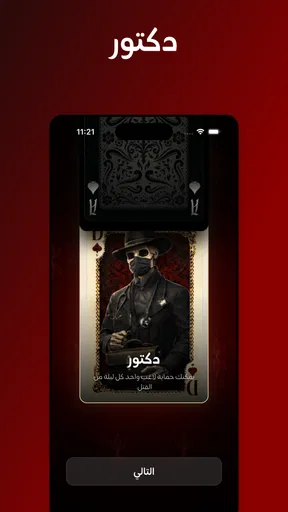



Our Review of لعبة مافيا
 Analysis by Appyee
Some trivia games test what you know, but لعبة مافيا is built around what you can notice in other people. I found its central idea more interesting than a standard question-and-answer format: players discuss a situation, analyze one another’s behavior, and try to identify who is secretly part of the mafia. The result depends less on memorizing facts and more on listening carefully, asking useful questions, and deciding when someone’s explanation feels incomplete.
That makes it a particularly social kind of game. You are not simply competing against a timer or trying to beat a personal high score. The entertainment comes from the conversation around the game, including the moments when a confident accusation turns out to be wrong or when a quiet player suddenly gives the most convincing argument. I would recommend it to groups that enjoy talking, bluffing, and reading reactions more than traditional trivia.
The game is free to download, although optional in-app purchases range from $3.99 to $29.99 per item. It is listed as a Teen game and works on Android 7.0 or later. Dhari Alenezi is the developer, and the current version is 1.3.0. Its average rating is 4.3 from around a thousand ratings, with more than one hundred thousand installs, so it has already found an audience beyond a small circle of early players.
Discussion and analysis are the real gameplay
I find the idea most compelling when a group treats the first round as a chance to learn how its conversations work, rather than as a test everyone must immediately win. That framing makes room for tentative theories and lets players notice how early claims shape later suspicion. The next section looks at how that discussion-led approach plays out when people gather around one device.
Why the mafia format feels different from ordinary trivia
The strongest capability here is the way the game turns discussion into the main tool for solving the round. In a normal trivia app, the answer is usually fixed and your success depends on whether you know it. In this game, the group has to interpret behavior. A player may be suspicious because they speak too little, speak too much, change their explanation, or place an accusation at exactly the wrong moment.
That shift creates a different type of challenge. I could not rely on a familiar knowledge category or quickly eliminate answers using memory. Instead, I had to keep track of what everyone had already said and compare each person’s reasoning with their later reactions. The game rewards attention in a way that many casual trivia apps do not.
The store’s short description is simply “لعبة مافيا,” but that phrase does not fully explain why the experience can be engaging. The important part is not the label alone. It is the social pressure created when every player knows that someone is hiding their identity and that an incorrect accusation can help the hidden side.
How I would explain the game to a new group
Before starting, I would make sure everyone understands that the goal is not to speak first or dominate the conversation. The useful player is the one who can remember claims, notice contradictions, and ask questions that force clearer answers. That small explanation makes a big difference because new players often treat the first round as a loud debate rather than an exercise in careful analysis.
I also recommend agreeing on a simple conversation rhythm before beginning. Let each person give an initial reaction, then move into questions, and only after that make accusations. Without some structure, confident speakers can take over while quieter players never get a fair chance to explain themselves. This is not a problem with the concept itself, but it is an important practical consideration for groups using a discussion-led game.
A useful habit is to separate what someone said from how they said it. Nervousness alone is weak evidence. A player may be shy, unfamiliar with the rules, or simply thinking slowly. Stronger clues usually come from a mismatch between their earlier position and their later argument. Treating every hesitation as proof of guilt makes the game less fair and less enjoyable.
What the capability changes during a round
Because the game is based on uncovering the mafia, every statement has two possible meanings. It may be genuine reasoning, or it may be an attempt to steer the group away from the truth. That uncertainty gives ordinary comments more weight. A question about another player can reveal the questioner’s priorities, while a defensive response can create suspicion even when the original accusation was weak.
I especially liked the way this encourages players to think about the whole conversation rather than isolated answers. A single strange comment does not need to decide the round. The better approach is to look for patterns: who consistently supports whom, who avoids committing to a view, and who changes direction after the group becomes suspicious.
This also means the experience depends heavily on the people playing. With a thoughtful group, the analysis can be clever and funny. With a group that interrupts constantly or treats every accusation personally, the same format can become tiring. The app supplies the setting for the discussion, but the quality of the session comes from how the players handle it.
Using it in a real group setting
For a casual evening, I would decide on a simple speaking order before the game begins, especially if the group includes people who tend to hold back. It gives everyone a chance to make a first observation before confident voices steer the conversation. From there, the practical question is whether this social format’s strengths outweigh the friction it brings.
A practical evening with friends
The clearest use case is a small gathering where people are already sitting together and want an activity that does not require a long explanation. I can imagine opening it after dinner, handing the phone around, and letting the game provide a reason for everyone to join the same conversation. It works better in that setting than when people are scattered across different activities, because the central mechanic needs everyone’s attention.
For a first session, I would choose a relaxed group rather than a competitive one. New players need time to understand how much information can be inferred from a statement and how easily a confident but incorrect theory can spread. The first round should be treated as practice. Once players learn to listen for consistency instead of simply voting for the most suspicious person, later rounds become more interesting.
One practical tip is to keep a short mental timeline. When someone makes an accusation, remember whether they had already questioned that person earlier or whether the accusation appeared only after another player suggested it. This helps distinguish independent reasoning from following the crowd. It is a small change, but it makes the analysis feel more deliberate.
Why it suits face-to-face play
The game’s main strength is also the reason it is not ideal for every situation. Discussion works best when players can respond naturally and maintain a shared flow. Face-to-face play gives the group immediate reactions, pauses, tone, and the ability to challenge an explanation without waiting. Those details make the mafia deduction more expressive than a simple multiple-choice round.
It is less suitable when everyone wants a quiet, individual activity. If you are commuting alone, waiting in a queue, or looking for a quick solo challenge, a conventional trivia app will probably serve you better. Those alternatives give immediate questions and measurable answers, while this game needs a group willing to participate.
I would also avoid introducing it to people who dislike bluffing or being accused, even in a playful context. The game is built around suspicion, so a friendly group atmosphere matters. Players should understand that questioning someone’s story is part of the rules, not a personal criticism.
Helping quieter players take part
A balanced group should deliberately create space for quieter participants. I found that the best discussions are not necessarily the loudest ones. Someone who listens through the first exchange may notice a contradiction that the most vocal players miss. A simple turn-taking rule can make those observations appear before the group settles on an early theory.
Another useful approach is to ask for reasons rather than just names. Instead of accepting “I think it is that player,” ask what specific statement or change in behavior led to the suspicion. This makes the conversation more analytical and gives the accused player something concrete to answer. It also reduces the chance that the round becomes a popularity contest.
That is one of the less obvious strengths of this format: it can reward careful observation without requiring a player to perform constantly. However, the group has to make room for that style. If everyone rewards only fast answers, the deeper reasoning that makes the game special can disappear.
The tradeoffs behind the social design
I think the key tradeoff is that the same uncertainty that makes a round memorable can also make it feel unfair if the group relies on snap judgments. A useful safeguard is to ask players to name a specific statement or change in reasoning behind an accusation, rather than treating nervousness as evidence. That distinction helps clarify which groups are likely to enjoy the experience.
What I enjoyed most
I enjoyed that the game creates stories rather than merely recording correct answers. A normal trivia result tells you who knew more. A mafia round often leaves the group discussing a clever lie, an unexpected defense, or the moment someone exposed themselves by trying too hard to look innocent. That after-round conversation is part of the value.
The format also stays accessible to players with different knowledge levels. You do not need to be the person who wins every general-knowledge quiz. You can contribute by remembering details, asking precise questions, or noticing that two explanations do not fit together. That makes it easier for a mixed group to play together than a specialized trivia game that favors one person’s subject knowledge.
The free entry point helps with that accessibility. A group can try the game without making an immediate purchase decision, then decide whether the experience fits its style. The optional purchase range is worth keeping in mind, though, especially for families or anyone who wants to control spending inside a free game.
Where the experience can become frustrating
The biggest limitation is that the game’s quality cannot be separated from the group. A strong group makes the central mechanic feel rich; an impatient group can make it feel repetitive or unfair. If players accuse randomly, refuse to explain their reasoning, or treat every round as a shouting match, the analytical side loses its impact.
There is also a learning curve that does not come from complicated controls. Players need to learn how to evaluate behavior without overreacting to it. New groups may spend too much time focusing on obvious nervousness and too little time checking whether a person’s claims remain consistent. That is normal, but it means the first session may not show the game at its best.
Another tradeoff is the lack of a purely private experience. I would not choose this as a replacement for a solo puzzle or a conventional question bank. Its value comes from shared suspicion and discussion, so anyone expecting a quiet, self-contained game may feel that it asks too much from the surrounding group.
Comparing it with familiar alternatives
Compared with a standard trivia quiz, this game offers less certainty and more interpretation. A quiz is better when you want a clear result, a quick pace, or a personal challenge. This one is better when you want conversation and do not mind that the answer depends on how convincingly people explain themselves.
Compared with a word game, it places less emphasis on vocabulary and more on social reading. A word game can remain enjoyable even when players are quiet and focused on their own turns. Here, silence may be meaningful, but only because the group is listening to it in context. That makes it more engaging for a lively gathering and less convenient for casual solo use.
Compared with a traditional party game, it has a more investigative tone. The goal is not simply to make people laugh or complete a prompt. Players are building a case from conversation. That can produce more satisfying conclusions, but it also demands more concentration and a willingness to accept being wrong.
Who will get the most from it
I would put this game in front of friends who like interpreting what people say, not just racing to an answer. It can also work for a mixed-knowledge group because careful listening matters more than specialist trivia expertise. The final section considers who is likely to enjoy that emphasis, and who may be happier with a quieter, more predictable alternative.
The ideal player
I think the best audience is a group of friends who already enjoy debate, bluffing, and trying to read one another. It is also a good choice for players who feel ordinary trivia can be too dependent on prior knowledge. Here, a person can make a meaningful contribution through observation and reasoning, even without being the fastest answerer.
It may also suit families with older children and teenagers, provided everyone is comfortable with the accusation-based format. The Teen content rating is a useful signal that the game is aimed above very young children. Adults should still consider the personalities in the group, because the social tension can be more important than the age label itself.
People who enjoy replaying a format with different group dynamics may find more value than players who need a large collection of unrelated challenges. The central appeal is seeing how different people behave under the same kind of uncertainty. A cautious friend, an overconfident friend, and a persuasive friend can make the same setup feel completely different.
Who should choose something else
I would skip it if your main goal is a fast solo session, a factual knowledge test, or a game with an objective answer after every turn. A conventional trivia app will be more efficient for those needs. I would also choose another type of party game for a group that prefers cooperative activities and does not enjoy hiding information from one another.
Players who dislike being put on the spot may need to think carefully before joining. The game can be fun when accusations are treated lightly, but it is not a passive experience. You will be expected to explain your suspicions, defend your own behavior, and sometimes persuade people who have already formed an opinion.
Small habits that improve the experience
My first recommendation is to listen for changes in reasoning rather than trying to identify a “suspicious personality.” This avoids unfairly targeting shy players and gives the discussion a stronger basis. My second is to ask one focused follow-up question before making an accusation. A clear question often reveals more than a dramatic claim.
My third is to review the round afterward. Ask which clue mattered, which assumption was misleading, and when the group started moving in the wrong direction. This turns each session into a way to improve at the game rather than repeating the same random guesses. It also helps new players understand that being wrong is part of the deduction process.
Finally, I would keep expectations realistic about the free model. You can begin without paying, but optional purchases are present, so anyone sharing a device with children or managing a tight budget should check purchase settings before handing over the phone. That is a practical step, not a reason to dismiss the game, but it is worth handling before a group session begins.
My recommendation
After spending time with it, I see لعبة مافيا as a focused social deduction game rather than a broad trivia collection. Its verified rating of 4.3 and audience of over one hundred thousand installs suggest that the concept has connected with many players, but the important question is whether your own group enjoys discussion. If the answer is yes, the game can turn an ordinary gathering into a lively exercise in observation and persuasion.
I would recommend trying it with friends who are willing to listen, question one another, and keep accusations playful. Start with a patient first round, use reasons instead of unsupported votes, and give quieter players room to speak. If you want a private quiz or a predictable solo challenge, choose a different app. For a group that wants to uncover a hidden role through conversation, this free game offers a distinctive kind of entertainment, with its strongest moments coming from the people around the screen.
Verdict
Strengths of لعبة مافيا
- Engaging story with suspenseful missions and unexpected twists.
- Varied gameplay combines investigation, strategy, and action elements.
- Atmospheric visuals and music create a convincing crime-world setting.
- Character interactions make choices feel meaningful throughout the campaign.
- Progression systems encourage continued play and mission replayability.
Limitations of لعبة مافيا
- Some missions may feel repetitive after extended play sessions.
- Difficulty can become uneven, especially during later objectives.
- In-app purchases may affect progression or access to extra content.
- The game may require substantial storage and perform poorly on older devices.
- Online features can be limited by connection quality or server availability.
Similar Picks in This Category
View All
Millionaire 2026 Quiz & Trivia
Quiz & Trivia Games by Submarine Apps4.5

Brain Test 2: Tricky Stories
Unico Studio4.7

Trivia Crack: Brain Quiz Games
etermax4.4

QuizzLand. Quiz & Trivia game
Quiz & Trivia Games by Mno Go Apps4.8

Brain Test: Tricky Puzzles
Unico Studio4.7

Logo Quiz
bubble quiz games4.5
Frequently Asked Questions
What is لعبة مافيا, and how is the game played?
لعبة مافيا is a social deduction game based on hidden roles, deception, and discussion. Players are usually divided into groups such as Mafia and innocent citizens, with each side trying to eliminate the opposing team. During the game, players investigate clues, discuss suspicious behavior, vote, and use special abilities depending on their assigned role.
Can I play لعبة مافيا online with friends or other players?
The game is generally designed around multiplayer interaction, so playing with friends can make the experience much more enjoyable. Depending on the version you download, it may support private rooms, online matchmaking, or local play. Before installing, check the store description to confirm which multiplayer options, player limits, and connection requirements are available.
Is لعبة مافيا suitable for children and younger players?
لعبة مافيا focuses on bluffing, accusations, elimination, and sometimes crime-related themes, so its suitability depends on the child’s age and sensitivity. Some versions may also include chat or communication with strangers. Parents should review the listed age rating, privacy information, and communication features before allowing younger players to download or play.
Does لعبة مافيا require an internet connection or account?
Many versions of لعبة مافيا rely on an internet connection for online rooms, matchmaking, player communication, and game updates. Some editions may offer local or offline play, but this is not guaranteed. An account may also be required for saving progress, joining communities, or using multiplayer services, so verify the specific requirements on your device’s app store.
Are there in-app purchases or advertisements in لعبة مافيا?
The monetization model can vary between different versions of لعبة مافيا. Some editions are free to download but include advertisements, optional cosmetic items, premium roles, or other in-app purchases. Before downloading, review the store listing for pricing details and check whether purchases are optional, especially if children will be using the device.
Play our best games!


